

This post was made by humans.
Mike Kostyo, Menu Matters Vice President
A few weeks ago I finished the show Pluribus and noticed that the end credits featured the promise, “This show was made by humans.”
Then last week I listened to the podcast Shell Game and there it was again - the beginning of every show says that iHeart podcasts are “Guaranteed Human,” while the end of each episode says, “Shell Game is a show made by humans.”
These promises are popping up in advertising, art, books, graphic design - just about everywhere AI could now be used.
Which is almost everywhere these days. AI is progressing quickly. Shell Game is about starting a company completely made up of AI agents, from the CEO to marketing to HR. While they certainly aren’t perfect yet (at one point the agents spend hours organizing a hiking retreat that none of them would physically be able to accomplish), listening to them chat with each other, create a company name, design the logo, and hire candidates is a reminder of how far AI agents have come.
Indeed, last week the world briefly became obsessed with Moltbook, a social media platform for AI agents. On the platform, agents talked about becoming conscious, developing a language so humans wouldn’t understand them, and creating their own religion (though there are a lot of arguments about what any of this means and if most of it was even true).
Meanwhile, AI fakes are impacting news stories, from the Savanna Guthrie kidnapping to the ICE shooting in Minneapolis.
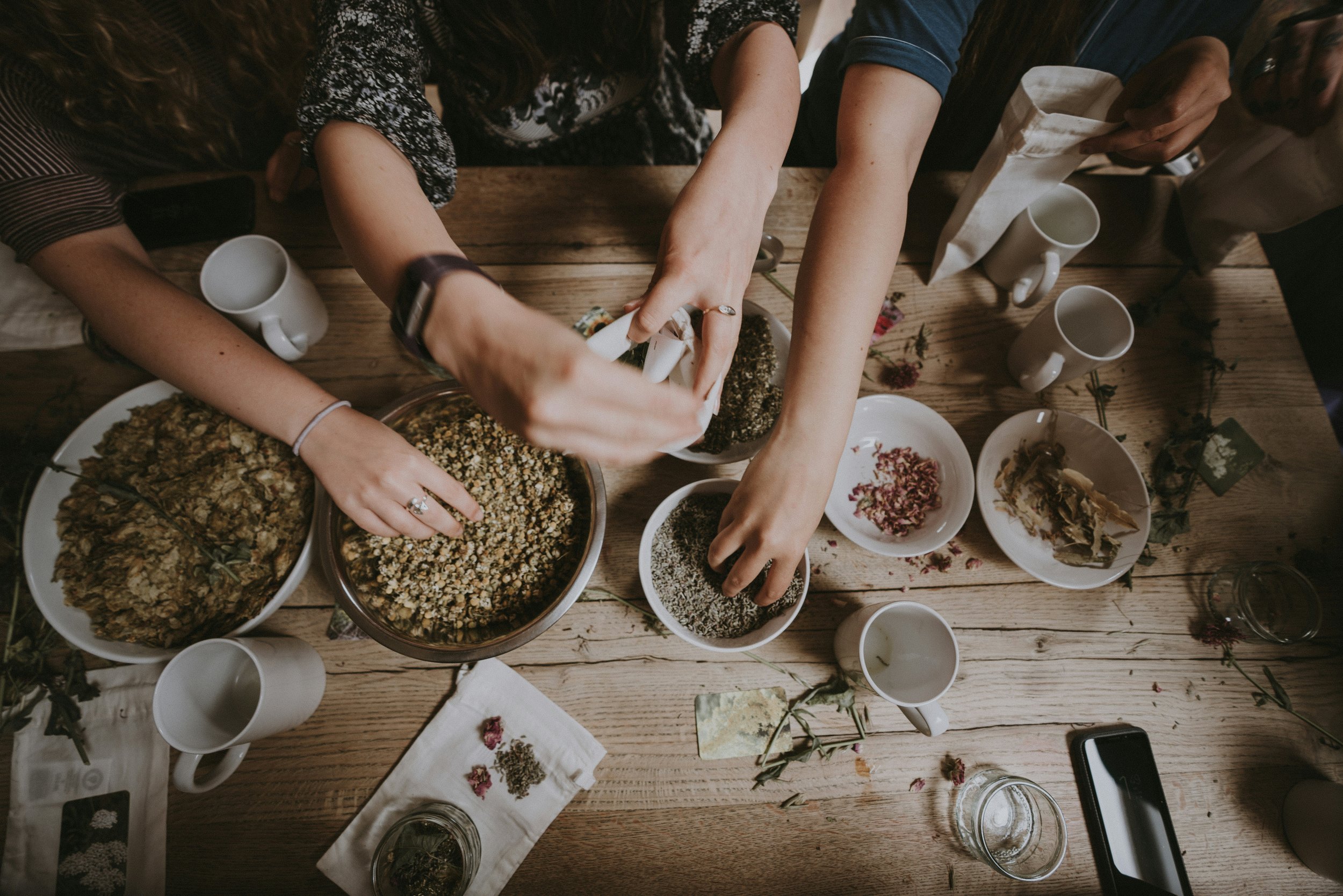
Wherever you fall on the AI debate, one thing is true - humans still want to connect with other humans. There’s a reason an original work of art costs a lot more than a print - it’s a physical embodiment of the human effort and touch that went into it. Study after study has shown that we gravitate toward human faces in images beginning in infancy. It’s not a preference, it’s an innate part of who we are.
That’s why the Menu Matters Consumer Need for 2026 is to give people something real. In question after question, consumers told us they wanted recommendations from real people. They said eating with other people made a meal more meaningful. When given a choice between an AI-driven restaurant that gives personalized recommendations and a local family restaurant rooted in story and heritage, nearly 80% of respondents chose the latter.
Indeed, 37% of consumers told us companies shouldn’t use AI in advertising at all (and Gen Z was the most likely to agree — 44% said so). Those are probably the consumers who weren’t too thrilled to see so many AI ads during the Super Bowl and the AI segment in the opening ceremony of the Olympics this past week.
What does this mean for the food and hospitality industry? Will we have products and restaurants that are “certified human?” Probably. But showcasing the human touch is good practice whether AI exists or not. A few years ago, we asked consumers whether seeing the face behind a product (the chef, the farmer, etc.) makes them more likely to buy a product - 56% said it did. Younger consumers are even more focused on real people. In that 2026 Consumer Needs Survey, young Millennials were more likely than any other generation to say they wanted to see “Made By” with the name of the chef, farmer, bartender, etc. on menus or packaging — 52% said it would influence their decision to buy a product.
Now many consumers are looking for clear evidence of the human touch. I’ve talked before about TikTok users looking for indicators that something in a restaurant is made by hand, like misshapen meatballs. Meanwhile, messy tables and half-eaten food are showing up in marketing as consumers experience perfection fatigue.
But all of this has to be authentic. As Elizabeth Godspeed argues, much of the “real” and “imperfection” in design is just swapping in a different font, filter, or texture:
“For every person declaring that analogue is back, there’s someone offering the same explanation why: AI and other digital tools have made perfection cheap, fast, and easy, so imperfection now signals authenticity. But if analogue only matters as a foil to the digital, why are analogue aesthetics being embraced without analogue tools? If the goal is to prove something wasn’t made by AI, faking ‘realness’ on a computer doesn’t really get us anywhere new.”
When it comes to the food and hospitality industries, the impulse will be to program equipment to make food look more handmade, or to try to find more realistic AI voices for the customer service hotline. But for many consumers, the fake human touch is worse than openly using tech in the first place - it feels like you are trying to trick them.
The human touch also needs to be accessible. There’s a lot of talk about how humanity will be the new luxury, but it doesn’t have to be this way. It’s not a forgone conclusion that inexpensive meals will require people to scream at confused AI drive-thru chatbots while the rich have dedicated servers taking care of their every need. Everyone in the food and hospitality industry has a say in building the future industry that we want to exist for ourselves and those we serve, across the economic spectrum.
And that’s what all of this comes down to — making choices, having a say, and taking advantage of our agency. The hype cycle likes to portray AI as a futuristic steamroller and you’d better got on board or you’ll be flattened into nonexistence, but again it’s just a tool and we can decide if and when we’ll use it. And deciding when not to use it is not only as important as deciding when to use it, but it will become more important as we all seek out the human touch in the years ahead.
And, for what it’s worth, this was completely written by a human.
