

Menu Matters Monthly Minute | June 2026
The power of limits.
"What would you make if you had unlimited resources?"
If you've ever been in an innovation session to make a new menu item or product, you know that this question gets asked all the time. Unfortunately, it's not a great question. Without any limits or parameters, there is nothing to sink your teeth into. There's no foundation. It's basically staring down the scary blank page with no direction.
Now, imagine asking which store would never carry your product. How do you crack it? How do you make it possible? Do you reframe your product? Tweak it? Create something brand new?
Limits almost always make us more creative. Think about the indie movie director who suddenly graduates to the big time. They now have massive budgets, access to every resource, their pick of every actor they could ever want. But, almost inevitably, the resulting movie is less interesting and creative than the independent film that put their name on the map.
We're not saying anything new here. There are an endless number of books, podcasts, essays, articles, and research reports on how constraints foster creativity.
Indeed, the food industry has long been an expert at turning limits into innovation. We take "trash" foods nobody wants (think everything from lobster to misshapen produce) and turn them into something desirable. We base entire prix fixe menus around what's in season. When an ice cream vendor runs out of cups, he invents the waffle cone.
We have plenty left to solve. Right now, for instance, everyone is trying to make a natural red color that's heat stable. They're right to worry, as our most recent survey showed that artificial colors and dyes are the number one category that consumers expect food companies to remove.
And the list goes on. Preservative-free foods that still last. Reaching people with education campaigns when they're already drowning in information. Solving sourcing shocks in categories like coffee and cocoa. Harnessing tech without losing the human touch.
These are all thorny problems with built-in constraints. But we'll not only solve them, along the way we'll probably stumble into newer, better ideas, with ancillary positive impacts we never even considered. That's what constraints do. So the next time someone asks what you'd build with unlimited resources, try the better question instead: what would you build with almost none?
DID YOU KNOW?
44% of people are feeling hopeful right now.
In fact, “hopeful” is the top emotion people are feeling as we head into the latter half of the year. Younger people are even more hopeful, with 51% of Gen Z saying it’s how they are feeling right now.
Does that surprise you? With reports of the consumer sentiment index tanking and a general focus on how horrible nearly every aspect of life is right now, it might have surprised us if we didn’t see the same dynamic happen last year.
Indeed, for two years now we’ve asked people how they are feeling as we head into the next year and the predominant emotion has been “hopeful.” And both times we followed that up with another survey in the middle of the year, after a seemingly endless barrage of negative world news, and the sentiment held up.
Americans are, generally, an optimistic bunch. While they may have negative feelings on particular issues, and they can experience many emotions over time (“anxious” was the second most popular choice), they generally hope that the days ahead will be a bit better.
So before you take it for granted that everyone is angry and checked out, consider that the top emotion many people feel is actually positive. And consider how that may change the types of foods and products they are seeking out. It may not all be comfort foods and nostalgia designed to take their minds off of the negative emotions, because those negative emotions aren’t necessarily dominating.
Hungry for more? We dive into these stats on the most recent episode of The Mess Hall podcast.
What We Learned
On LinkedIn, we start the week with our #MondaySparks (three creative ideas to jumpstart the week) and end the week with our #FridayFive (five things we learned in the past week). Here are five of the most popular posts from the past month:
How the loss of the Major Oak is changing how we protect veteran trees.
Working from home is alive and well, but there are negatives…
How Spam went from a Depression-era solution to nostalgic darling.
You can catch every #FridayFive, #MondaySparks, and more here and here.
The Hot List
Delicious meals, excellent hotels, favorite products, thought-provoking books, great TV shows and movies — these are some of Maeve and Mike’s favorite recent discoveries.
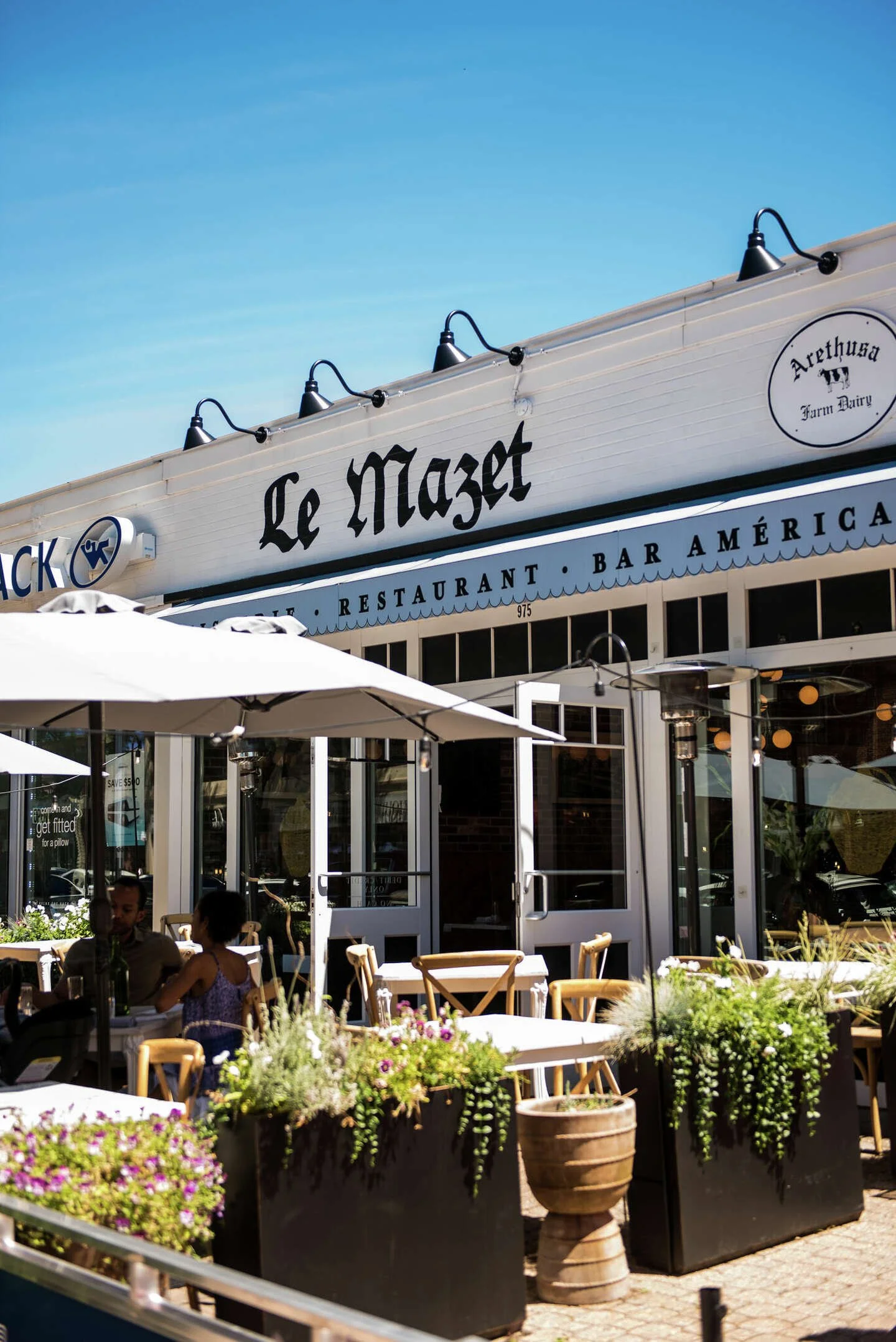
Le Mazet
“If you’ll find yourself out East anytime soon, a few restaurant recommendations. Amherst Oyster Bar has been open for a little over a year and they already fit right in. The oysters were so good we ordered a second round, the caserecce vongole (pasta with clams and bottarga) was my favorite entree (though the mushroom-based ‘foolyabase’ has the best name). Meanwhile, in West Hartford, CT, La Mazet is doing rustic Mediterranean cuisine like a croque monsieur with duck fat aioli and regular pig roasts with free-flowing wine, while Avert Brasserie is so good I’ve been twice, though they took their gougeres (the best I’ve ever had) off the menu. And throughout the region (and from the same owners as Avert) look for a DORO Marketplace (there is one right near Bradley Airport), which now has five locations (I wish I had invested in this growing chain) serving delicious pastries, salads, flatbreads, and coffee (I had an amazing Cherry Pie Chai) alongside a marketplace of gourmet goodies.” MIKE
“While in Chicago for NRA, the Menu Matters team took some time to check out Gus’ Sip & Dip. The lure may be $12 cocktails ($12 for every cocktail on the menu), but the ‘bang for your buck’ is the atmosphere and the service. It's a dive bar that's elevated the experience without creating something bougie and unrecognizable. What's more, the service was great and their knowledge of the cocktails helped all of us land on beverages that hit the mark individually. It may not be the obvious spot for a summer hang (no outdoor seating and a decidedly dark atmosphere) but it's worth it, and you may appreciate the contrast.” MAEVE
“One newsletter I read religiously is Worse on Purpose. It dives deep on the ‘enshittification’ of nearly every category you can think of, from retail stores to mattresses to appliances. How did these brands we used to trust start turning out products that are so cheap and unreliable? But, the best part is that they end each edition with brands in that category you can still trust, which they keep track of in The Brand Ledger. If you can’t decide which brands are still worth your time and money, particularly before a big purchase, I recommend starting here. ” MIKE
Where We’ll Be
Columbus, OH - July 9 - Private Client Event
Chicago, IL - July 15-16 - Private Client Event
Palm Harbor, FL - July 27-29 - Chicken Marketing Summit
Tampa, FL - July 29-30 - Innovation Hunting Trip
Sacramento, CA - August 11-13 - Private Client Event
Munich, Germany - IACC Europe Knowledge Festival
How do we build a better convenience store?
The latest episode of the Menu Matters podcast — The Mess Hall, where we have messy conversations about the thorny topics that matter to the food and beverage industry — is here. And this episode marks one year of The Mess Hall podcast! (Sorry, Ina, we were getting messy first.)
In this episode of The Mess Hall, we dig into the freshest data from our 2026 Consumer Needs Mid-Year Update Survey. We share the findings that surprised us the most: why younger consumers say 2026 has gone better than expected and what that streak of American optimism means for food innovation, plus we unpack consumer confusion around ultra-processed foods. Then we sit down with convenience store expert Frank Beard to ask what America can actually learn from the Japanese konbini. Frank makes the case that great food doesn't have to mean "bougie" food, that the real opportunity isn't out-competing fast food but filling America's missing street food gap, and that pride is what separates a truly successful store from one that's just offering gas station food 2.0. Plus, Beard offers his take on the trends people are only pretending to like.
You can find it on all of your favorite podcast platforms (Apple, Spotify, Amazon, Overcast).
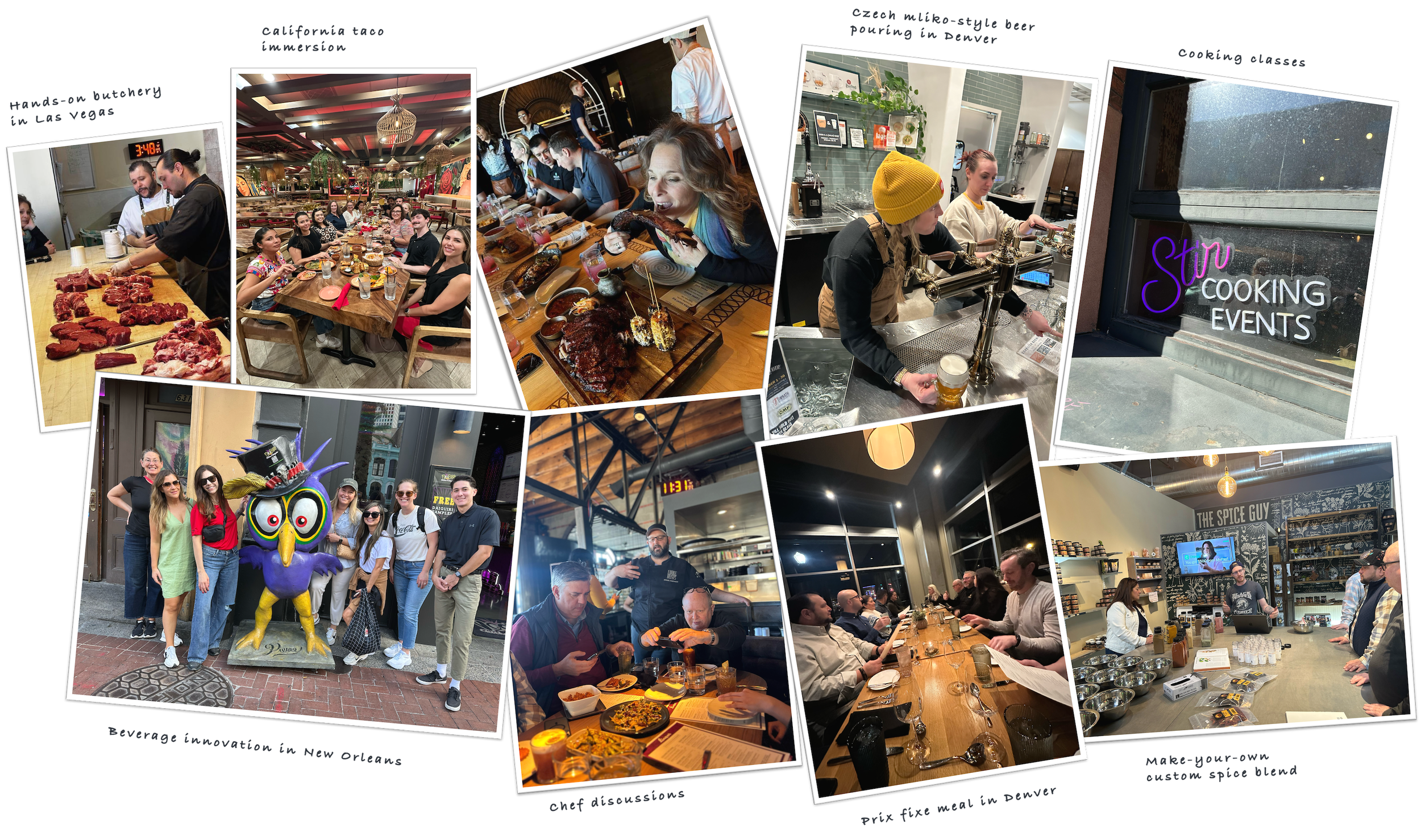
Get Your Q3/Q4 Insights Immersion on the Calendar
Have you always wanted to host an in-market insights immersion for your team and/or clients? Now is your time to get it on the calendar for this fall or winter.
There’s nothing quite like an in-market trend immersion to spark new ideas, bring data and insights to life, experience every sensorial aspect of a dining experience, and bring a team together to capture the imagination. But there’s also nothing quite like a Menu Matters immersive experience, which are designed to bring that “wow” factor, going beyond a simple tour to include pre-event engagement, guidance to get the most out of the event for each attendee and meet concrete goals, tools like bespoke apps to take the experience to the next level, and post-event follow-ups to keep the ideas flowing.
The goal is for attendees to not just leave having had a great social experience, but to push them to think anthropologically about the food and trend landscape, ultimately capturing ideas to share with internal teams and jumpstart future initiatives.
